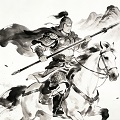
Did Yue Fei have any descendants?
Yue Fei (1103–1142) was a well-known general during the Southern Song Dynasty and is still remembered today as a powerful symbol of loyalty in Chinese history because he was falsely accused and put to death.
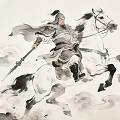
Yue Fei (1103–1142) was a well-known general during the Southern Song Dynasty and is still remembered today as a powerful symbol of loyalty in Chinese history because he was falsely accused and put to death, which ended his life in a tragic way. In addition to his success as a soldier and the strong moral example he set, many people have wondered for a long time whether he had children who went on to carry his family name forward.
Family Background and Immediate Kin
Historical records tell us that Yue Fei got married two times—first to Lady Li and later to Lady Liang—and that he had several children, including five sons and at least one daughter: his oldest son, Yue Yun (1119–1142), who fought alongside him and was executed at the same time; four younger sons named Yue Lei, Yue Ting, Yue Lin, and Yue Zhen, who all survived the political crackdown; and a daughter, usually called Yue Yin’er, who, according to tradition, took her own life when she heard about her father’s death, although there is very little solid written evidence about her.
After Yue Fei was killed in 1142—a decision pushed by Chancellor Qin Hui and approved by Emperor Gaozong—his whole family lost their social standing and was forced into exile, but it is clear from reliable sources that his younger sons were not sentenced to death and were eventually able to return to ordinary life.
Official Rehabilitation and Familial Restoration
Twenty years later, in 1162, Emperor Xiaozong officially cleared Yue Fei’s name, gave back his titles, and restored his honor, which allowed his surviving sons to rebuild their lives and regain respect in society—for instance, Yue Lin played an important role in gathering and saving his father’s writings, and the government also granted the family land and formal recognition, both of which helped ensure that the Yue family line would not die out.
This official change turned Yue Fei from someone once seen as a traitor into a celebrated national hero, and it also protected his descendants so they could be remembered in future generations.
Genealogical Evidence Across Dynasties
Old family documents, especially theYue Family Genealogy Yue Shi Jia Pu), trace a direct line from father to son all the way from Yue Fei’s time to the present day, and these records were carefully updated over centuries, listing generations of the family across regions such as Henan, Zhejiang, Jiangsu, and Sichuan.
In more recent times, groups like the Yue Fei Cultural Research Association include people who say they are direct descendants and who take part in ceremonies to honor his memory—for example, in 2013, during the 910th anniversary of Yue Fei’s birth, many of these individuals gathered at the Yue Fei Temple in Hangzhou and brought with them old family tablets and handwritten genealogies that show their connection to him, which shows how strongly his story is still kept alive through family tradition and organized efforts to protect that history.
Cultural and Biological Continuity
While there is no complete genetic proof yet, the combination of stories passed down orally, detailed family books, and consistent naming patterns—often based on special poems that decide which character appears in each generation’s names—makes the claims of descent seem very believable, and most people who carry the surname Yue (岳) and trace their roots back to him still try to live by the values he stood for, such as honesty, love for their country, and deep respect for family.
Conclusion
When we look at both historical facts and family records together, it becomes clear that Yue Fei did leave behind descendants, and even though his family faced serious danger right after his death, his younger sons managed to keep the lineage going, so that today thousands of people—both in China and in overseas Chinese communities—identify themselves as his direct heirs, which shows not only that his family line has lasted through the centuries but also that his influence remains deeply rooted in East Asian culture.
Note: While it’s not possible to confirm every single person’s claim, most historians and experts agree that the main family line recorded in traditional genealogies is genuine.