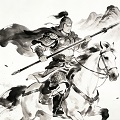
Did Cao Cao really kill someone in his sleep?
Cao Cao (155–220 CE) was a major and much-debated figure during the final years of China’s Eastern Han dynasty, remembered as a clever commander, a driven ruler, and someone who could be very harsh when it came to politics.
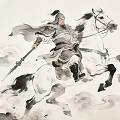
Cao Cao (155–220 CE) was a major and much-debated figure during the final years of China’s Eastern Han dynasty, remembered as a clever commander, a driven ruler, and someone who could be very harsh when it came to politics. One well-known tale claims that he once killed a person while pretending to be asleep, and this story is often brought up to show just how distrustful and cold-hearted he could be; however, there’s reason to ask whether this event actually took place or if it was simply invented later to shape how people saw him.
Primary Sources: Contrasting History and Fiction
The earliest version of this story does not appear in real historical documents but shows up in later storytelling, especially in Luo Guanzhong’sRomance of the Three Kingdoms, a novel written in the 14th century, where Chapter 72 describes how Cao Cao warned his attendants that he had a strange habit of lashing out and killing anyone who came near him while he slept, so one night when he lay on his bed pretending to doze off and a faithful servant quietly covered him with a blanket after it slipped away, Cao Cao immediately jumped up and killed the man before later acting heartbroken, giving him an expensive funeral, and saying the servant died because he ignored the warning.
This dramatic moment is meant to paint Cao Cao as someone who uses tricks and fake emotions to control others, which fits with how the novel usually shows him—as the opposite of good-hearted leaders like Liu Bei.
On the other hand, Chen Shou’sRecords of the Three Kingdoms Sanguozhi), which was written in the 3rd century and is considered the most reliable source for that period, contains no trace of this incident; although it mentions Cao Cao’s sharp mind, tough decisions, and even executions such as that of his adviser Yang Xiu, it never says anything about him harming someone during sleep or faking sleep to justify violence.
Assessing Historical Credibility versus Narrative Function
Most experts agree that the “sleep-killing” story is not based on fact but was likely added by later writers who wanted to make Cao Cao seem more villainous; during the Song and Ming dynasties, storytellers followed Confucian values that liked clear lines between good and bad people, so heroes like Liu Bei were lifted up while Cao Cao was turned into a symbol of selfish ambition and moral failure.
The purpose of the tale is easy to see: it shows that Cao Cao trusted no one, not even those who served him faithfully; it reveals how he used performance, like pretending to sleep or showing fake sorrow, to manage how others viewed him; and it makes his rule feel unpredictable and threatening.
In reality, doing something like this would have been unwise because killing a loyal helper for no solid reason could damage trust among his close staff, and Cao Cao was known for being too practical and level-headed to take such a foolish risk.
Psychological and Cultural Dimensions
Looking at the story today, we can also understand it as reflecting old worries about power, loyalty, and deception; the idea of someone killing while asleep taps into deep fears that danger might come from someone who seems calm or harmless.
In traditional Chinese thought, sleep and dreams were seen as times when the line between truth and illusion gets blurry, so when Cao Cao claimed he might kill without knowing it, he tried to shift blame away from himself—but since the story makes it clear he was fully awake, the act was not a mistake but a carefully planned move to remind everyone who held the real power.
Conclusion
There is no strong evidence that Cao Cao ever killed someone while truly asleep or staged such a scene the way the novel describes; instead, the episode is best understood as a fictional addition created to strengthen his image as a cunning and ruthless leader.
Even so, the fact that this story has lasted for centuries tells us a lot about how complicated Cao Cao’s legacy really is—he was both a capable organizer and a skilled general, yet he often acted in ways that crossed ethical lines, and whether or not he ever “killed in his sleep,” he clearly knew how to use fear, planning, and public displays to keep control.
As a famous saying goes:
“I would rather wrong the world than let the world wrong me.”
Even if he never actually said those words, both this quote and the myth about killing during sleep continue to shape how people think of Cao Cao—as someone who was brilliant but also deeply feared.