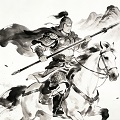
In what year did the Battle of Julu take place?
The Battle of Julu (巨鹿之战) was a key event during the final years of the Qin Dynasty (221–206 BCE), where rebel forces clashed with the once-powerful Qin army.
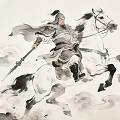
The Battle of Julu (巨鹿之战) was a key event during the final years of the Qin Dynasty (221–206 BCE), where rebel forces clashed with the once-powerful Qin army, changing the path of Chinese history and showing just how skilled Xiang Yu was as a military leader—a figure still well known today.
Historical Background
By 207 BCE, the Qin government, which had first been united under Emperor Qin Shi Huang, was falling apart because people were fed up with strict laws, forced labor, and high taxes, so revolts broke out across the empire—starting with early uprisings led by Chen Sheng and Wu Guang and later growing into stronger movements led by regional figures like Liu Bang and Xiang Yu.
Chronology and Geographic Setting
This battle took place in 207 BCE near the city of Julu, which is located in what is now Pingxiang County in Hebei Province, at a time when the Qin Dynasty was nearly finished and rebel groups were pushing hard to bring it down for good.
Principal Commanders
Xiang Yu: A bold and determined general leading the Chu rebels, famous for his clever tactics and bravery in combat, who would later take the title “Hegemon-King of Western Chu.”
Zhang Han: The top commander of the Qin forces, who had successfully crushed earlier rebellions but ended up defeated at Julu.
Song Yi: Xiang Yu’s superior in the Chu army, whom Xiang Yu removed by force so he could take full control—an action that clearly showed his drive and willingness to act fast.
Military Campaign and Strategy
Even though his army was much smaller than the Qin’s, Xiang Yu came up with a daring plan: according to Sima Qian’sRecords of the Grand Historian Shiji), he told his men to smash their cooking pots and sink their boats—a move known as “breaking the cauldrons and sinking the boats” (破釜沉舟)—so they would have no way to retreat and would fight with everything they had.
Through a series of intense fights, Xiang Yu’s troops managed to beat the larger Qin army, effectively wiping out its main fighting force and forcing General Zhang Han to give up, which gave other rebel groups new confidence since many had been too scared to challenge the Qin before but now felt encouraged to join the struggle after seeing what Xiang Yu had done.
Consequences and Historical Impact
After this defeat, the Qin Dynasty’s collapse became unavoidable; not long after, the capital Xianyang fell, and in 206 BCE, Ziying—the last ruler of Qin—surrendered to Liu Bang, while Xiang Yu rose as the strongest military figure of the time, though his rivalry with Liu Bang quickly turned into open conflict known as the Chu-Han Contention, which eventually led to Liu Bang founding the Han Dynasty.
More than just a battlefield win, the Battle of Julu has come to stand for total dedication and courage when the odds seem impossible, and the saying “breaking the cauldrons and sinking the boats” is still commonly used in Chinese to describe someone who is fully committed with no thought of turning back.
Conclusion
Fought in 207 BCE, the Battle of Julu was a major moment in ancient Chinese history because Xiang Yu’s strong leadership and clear strategy broke the backbone of the Qin military and helped open the door to a new era.