Why Was the Battle of Julu Important?
The Battle of Julu, which took place in 207 BCE, was a major turning point in ancient Chinese history because it happened right as the Qin Dynasty was quickly falling apart.

The Battle of Julu, which took place in 207 BCE, was a major turning point in ancient Chinese history because it happened right as the Qin Dynasty was quickly falling apart, and it not only changed how the rebellions against Qin rule unfolded but also reshaped China’s political future for many generations.
A Decisive Military Reversal: The End of Qin Supremacy
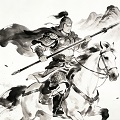
Even though the Qin state was already dealing with growing unrest and internal trouble, it still had a powerful army before the Battle of Julu, and the troops stationed there under General Zhang Han were among the empire’s most well-trained and battle-hardened forces; however, Xiang Yu—the fierce and determined leader of the Chu rebels—chose to use a bold and unusual plan that went completely against normal ways of fighting.
He famously told his men to sink their boats and smash their cooking pots, an action later remembered as“breaking cauldrons and sinking boats” 破釜沉舟), which made it impossible for them to retreat and forced them to fight with everything they had; as a result, even though they were badly outnumbered, Xiang Yu’s soldiers pulled off a complete victory by wiping out the main Qin army, proving that the strongest military force could still be beaten if the other side had higher morale, better leadership, and smarter tactics.
Political Transformation: Hastening the Demise of Imperial Qin
After losing at Julu, the Qin government lost its grip on power because it no longer had the army needed to control the country or stop other uprisings from spreading, and within just one year, Ziying—the final ruler of the Qin—surrendered to Liu Bang, who would go on to create the Han Dynasty, officially bringing the Qin era to an end in 206 BCE.
In the aftermath of the battle, Xiang Yu rose to become the most powerful figure in the land, and he split up the former Qin territories among various rebel leaders while giving himself the title “Hegemon-King of Western Chu,” trying to bring back a system similar to the old Warring States period where many small states were ruled by local lords; although his control didn’t last very long, the sudden absence of strong central authority after the Qin collapse led straight to the Chu-Han Contention—a bitter and drawn-out struggle between Xiang Yu and Liu Bang that finally ended with Liu Bang’s victory and the start of the Han Dynasty, which became one of the most influential empires in Chinese history.
Enduring Symbolism: A Paradigm of Resolve and Sacrifice
Beyond its immediate effects, the Battle of Julu also became deeply rooted in Chinese culture because Xiang Yu’s choice to destroy every way of going back turned into a famous example of total dedication, and over time, the phrase“breaking cauldrons and sinking boats” became a common expression used to describe situations where someone cuts off all escape routes and must either succeed or face total failure—much like the English saying about “burning your bridges.”
Even in modern times, people still talk about Julu when discussing brave decision-making, taking big chances, or launching major changes, since it shows that strong will and clear thinking can overcome greater strength or resources—a lesson that remains relevant today.
Conclusion
The Battle of Julu was far more than just a clash between two armies; it was the key event that brought down China’s first centralized empire and cleared the way for the rise of the Han Dynasty—a golden age that shaped Chinese identity, government, and society for centuries—and its story continues to live not only in history books but also in how people understand courage, determination.