Did Emperor Wu of Han establish the Imperial Academy?
Emperor Wu of Han, who ruled from 141 to 87 BCE, was a key leader during the Western Han Dynasty and is best known for turning Confucianism into the official teaching of the state.
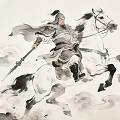
Emperor Wu of Han, who ruled from 141 to 87 BCE, was a key leader during the Western Han Dynasty and is best known for turning Confucianism into the official teaching of the state and beginning reforms that would deeply affect how China’s government worked; one of his most important actions was creating the Imperial Academy, also calledTaixue.
Historical Context
Before Emperor Wu took power, the Han government used a mix of ideas from Legalism, Daoism, and early Confucian thought to run the country, but by the middle of the 2nd century BCE, leaders realized they needed one clear set of beliefs to hold the empire together and prepare capable officials, so Confucian thinkers—especially Dong Zhongshu—began pushing hard for their philosophy to become the main guide for ruling, and around 136 BCE, Dong gave the emperor advice in a famous document known as the “Three Responses,” where he said the court should stop supporting other schools of thought and instead build a government-run school to teach Confucian books.
Founding of the Taixue
Taking Dong’s suggestion seriously, Emperor Wu officially opened the Imperial Academy in 124 BCE in Chang’an, which was the capital city, and unlike small or private schools, this one was fully supported by the state and trained young men to become future officials by studying the Five Classics—theClassic of Poetry, theBook of Documents, theBook of Rites, theYijing (orClassic of Changes), and theSpring and Autumn Annals—with about fifty students enrolled at first under the title “Disciples of the Erudites” Boshi dizi) and taught by state-chosen scholars known as Erudites Boshi).
This move marked a big change because it began shifting government jobs away from being handed out just because someone came from a powerful family and toward giving them to people who had studied hard and knew the right texts—a system that would later grow into the civil service exams used in later dynasties.
Historiographical Evidence
Old historical records back up the idea that Emperor Wu really did start the Taixue, since two major sources—Sima Qian’sRecords of the Grand Historian Shiji) and Ban Gu’sBook of Han Hanshu)—both say the academy was created during his rule, and theHanshu even gives the exact year by stating, “In the fifth year of the Yuanguang era [124 BCE], the Imperial Academy was established,” which makes it very likely that Emperor Wu was directly behind its creation given how close these books were written to the actual events and how reliable they are seen today.
Long-Term Implications
The founding of the Taixue led to several major changes that lasted for centuries: first, it made Confucianism the main belief system used by the government; second, it created a standard way of teaching that was controlled by the state; third, it helped move government hiring toward rewarding knowledge and study instead of family name or wealth; and fourth, it became a model that other East Asian countries like Korea, Japan, and Vietnam would later copy when building their own education and government systems.
The growing number of students also shows how important the school became—it started with only about fifty learners under Emperor Wu but expanded to more than thirty thousand by the end of the Eastern Han period, proving that the idea had real staying power.
Conclusion
Yes, Emperor Wu of Han did create the Imperial Academy in 124 BCE, and while it might look like just a school on the surface, it was actually a smart political step that changed how China picked and trained its leaders; by tying public service to Confucian learning, he helped build a system where what you knew mattered more than who your parents were, and that idea shaped Chinese society for over two thousand years.