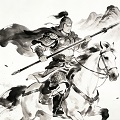
How did Xiang Yu defeat the Qin army at the Battle of Julu?
The Battle of Julu in 207 BCE was a turning point in ancient Chinese military history because it happened right as the Qin Dynasty was falling apart and allowed Xiang Yu.
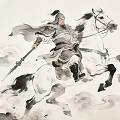
The Battle of Julu in 207 BCE was a turning point in ancient Chinese military history because it happened right as the Qin Dynasty was falling apart and allowed Xiang Yu—a bold and determined warlord—to become famous by crushing an army that most people believed could not be beaten.
1. Historical Background: Crisis of the Qin Regime
By late 207 BCE, the Qin government was in deep trouble since years of harsh rules, forced labor, and heavy taxes had made people across the empire angry and ready to rebel, so many uprisings broke out and the old state of Chu reorganized itself under King Huai II as a main center of resistance while the Qin general Zhang Han, who had already put down earlier revolts, moved to surround the city of Julu—located in what is now Hebei Province—where Zhao fighters were trapped, and although troops from Qi, Yan, and other former states gathered nearby, they stayed put because they were too scared to face the well-trained Qin soldiers.
2. Xiang Yu’s Rise to Command
At first, Xiang Yu served under Song Yi, who had been picked by King Huai II to lead the Chu relief force, but Song Yi waited for more than six weeks without moving toward Julu because he kept saying conditions weren’t right, even as the defenders inside the city ran dangerously low on food, so Xiang Yu decided that waiting any longer would mean total failure and took matters into his own hands by killing Song Yi and taking over command, a move that King Huai II later accepted as official; at that time, Xiang Yu only had between 50,000 and 60,000 men compared to the Qin’s 200,000 experienced fighters, yet instead of playing it safe like most leaders would have done, he chose to strike quickly and with full force.
3. The “Sink the Boats” Move: A Bold Psychological Step
Before his troops crossed the Zhang River to reach Julu, Xiang Yu gave them very clear orders: break every cooking pot, sink every boat, and carry only enough food for three days, and this famous act—now known in Chinese as“breaking the cauldrons and sinking the boats” (破釜沉舟)—was not just for show but meant to make sure there was absolutely no way to retreat, which forced every soldier to fight with everything they had because going back was no longer possible, and in doing so, fear turned into fierce determination.
4. How the Battle Was Fought: Nine Attacks in a Row
When Xiang Yu arrived at Julu, he didn’t wait for help from the other rebel groups who were watching from nearby hills, but instead launched nine attacks one after another over several days, and his plan worked well for three main reasons: first, his men moved fast and hit hard, which broke through Qin lines and cut off their supplies; second, each charge was louder and more aggressive than the last, which wore down the enemy’s spirit; and third, he noticed that the Qin army was split into two parts—Zhang Han’s main force and Wang Li’s siege unit—so he focused on Wang Li first, defeated him completely, and even took him prisoner; after nine rounds of fighting, the Qin siege collapsed, Wang Li’s entire force was wiped out, and historical sources say more than 200,000 Qin soldiers were either killed or captured, which left Zhang Han isolated and hopeless, so he surrendered with another 200,000 men, though Xiang Yu later ordered all of them executed at Xin’an—a cruel decision that showed how ruthless he could be but also removed any chance they would fight again.
5. What Happened After and Why It Matters
Winning at Julu instantly made Xiang Yu the top leader among all the rebel groups because the other commanders, who had done nothing during the battle, now bowed to him in fear and respect, and as the historian Sima Qian wrote, “no one dared look him in the eye”; more importantly, the battle destroyed the Qin army’s power for good and sped up the fall of the whole dynasty, so even though Xiang Yu eventually lost the civil war to Liu Bang—who went on to found the Han Dynasty—his victory at Julu is still studied today because it shows how strong will, smart choices, and total focus can overcome a much larger and better-equipped enemy.
Conclusion
Xiang Yu’s success at Julu didn’t follow normal rules of war because he made retreat impossible, which turned desperation into strength and pushed his men to fight like they had nothing to lose—and everything to gain—and the battle teaches a simple but powerful lesson: when people truly believe they must win or die, they often find a way to win, which is why the Battle of Julu is remembered not just as a clash of armies but as a lasting example of leadership, courage, and the power of commitment.